
(N.Morgan) Whenever I see the name Monsanto, it brings to mind the Nazi scientists, who experimented on the Jews, during WWII. They are cut from the same cloth, I suppose. Here's more evidence of the crimes being committed against us, by Monsanto. Poisonous foods, Frakenfoods, who's origins are mostly really unknown. None of them can tell us what these poisons will do to us long term. They know, but they will never tell. We are living with biological warfare every day and many of us don't realize it. They are committing acts of war against every day...

In September of last year, an international research team led by Dr.
Gilles-Eric Séralini of the University of Caen published a landmark
study in the Journal of Food and Chemical Toxicology. The study, titled “Long term toxicity of a Roundup herbicide and a Roundup-tolerant genetically modified maize,” purported to show adverse health effects on groups of rats fed Monsanto’s Roundup herbicide and Roundup Ready corn, including liver congestions, necrosis, tumors and early death.
The researchers followed 200 rats over two years, divided into 10
groups each of 10 males and 10 females.
Three of the groups were fed Monsanto’s patented NK603 GMO corn alone, three groups were fed the corn treated with Roundup herbicide, three groups were fed Roundup-treated water but no GMO corn and a control group was fed neither GMO corn nor Roundup herbicide. The team’s results indicated that the rats fed the Roundup or the GMO corn, separately or combined, were more likely to experience a range of ill health effects than the non-GMO control group.
Tellingly, the adverse health effects did not start to appear until the
fourth month of the study, while a previous industry-sponsored feeding
trial on the same corn variety only lasted three months. That study did find signs of toxicity as well, but these results were dismissed as “not biologically meaningful.”
The paper and its results, deemed “surprising” because it goes
against all of the industry-sponsored research showing the supposed
safety of GMOs, caused an immediate stir in the scientific community and online.
But it was not long at all before the biotech industry PR machine went into damage control mode and began smearing the study.
The desperation became apparent when the European Food Safety
Authority was tasked with examining the study that threatened to expose
the shoddy approval process that the EFSA itself had used to conclude in 2009 that the NK603 maize was “as safe as conventional maize.”
As researcher and author of “Seeds of Destruction,” William Engdahl, points out in a new op-ed, “EFSA argued that Seralini had used the wrong kind of rats, not enough rats and that the statistical analysis was inadequate. By these standards, all toxicity studies on glyphosate and GMOs should be retracted because they used the same type and approximate number of rats as those in the Séralini study.”
Amazingly, despite this concerted PR campaign to smear the Seralini study, seven “expert witnesses” were unable to rebut the study
in a Filipino courtroom. In October, a Flipino court of appeals upheld a
decision to ban BT eggplant from the country despite the efforts of
seven industry witnesses attempting to rebut the substance of Seralini’s
findings.
Perhaps this is why the Journal of Food and Chemical Toxicology took the unprecedented decision to retract the study last week. Unprecedented because it goes against the journal’s own express principles and guidelines for such retractions. The publisher of the journal, Elsevier, is a member of the Committee on Publication Ethics, whose criteria for retracting a paper are:
• Clear evidence that the findings are unreliable due to misconduct (e.g. data fabrication) or honest error;
• Plagiarism or redundant publication;
• Unethical research.
The editor of the journal, Dr. A. Wallace Hayes, himself admits that
the paper meets none of these criteria. In his own statement on the
retraction, he admits that he “found no evidence of fraud or intentional
misrepresentation of the data.” Yet still, the paper is being retracted
because “the results presented (while not incorrect) are
inconclusive),” apparently a new standard for article retraction that
seems to apply especially to articles critical of the GMO industry in
general and Monsanto products in particular.
It is not at all unfair to be cynical about this retraction either. On a radio program late last month, Dr. E. Ann Clark pointed out a surprising connection between the Journal and Monsanto that might
account not only for the retraction of the Seralini paper, but also the
recent retraction of a similar study from Brazil that demonstrated the toxic effects on mice of the Bacillus thuringiensis insecticide that forms the basis of the Bt GMO crops.
That a former Monsanto scientist should find himself in charge of a
specially-created post at the very journal that published two landmark
studies questioning the safety of that company’s products should
surprise no one who is aware of the Monsanto revolving door.
This door is responsible for literally dozens of Monsanto officials,
lobbyists and consultants finding themselves in positions of authority
in the government bodies that are supposedly there to regulate the
company and its actions. This list of officials includes Linda Fisher, a
senior EPA official who later became Monsanto’s VP of Government and
Public Affairs, Michael Taylor, Obama’s Deputy FDA Commissioner who also served as Monsanto’s VP for Public Policy, and US Supreme Court Justice Clarence Thomas, who served as a corporate lawyer for Monsanto in the 1970s. These positions of influence have been used to help Monsanto and its biotech peers obtain an FDA ruling which asserts that GMO foods are not substantially different from non-modified foods, win approval for their products from regulators by self-sponsoring studies with almost identical methodologies to the Seralini study that was just retracted, and pass favorable legislation like the Monsanto Protection Act,
preventing the company from being taken to federal court in the event
that GMOs are discovered to be harmful to human health. In his position
as “Associate Editor for Biotechnology,” former Monsanto employee
Richard E. Goodman has now overseen the retraction of two papers that
had been critical of his former employer, yet this fundamental conflict
of interest is nowhere commented on in reportage of the Seralini study’s
retraction.
Sadly, this is par for the course when it comes to the so-called
science behind the safety of GMOs. Time after time, shoddy and
poorly-designed toxicity studies that show the safety of these products
are given the seal of approval by bought-and-paid-for regulators, and
independent studies that show contrary findings are subjected to
arbitrary and nonsensical principles that supposedly undermine their
validity. As a recent article at GM Watch points out, numerous GM-related studies have been retracted in the past few years for misleading and downright fraudulent research.
The list of frauds and abuses continue to mount, from concerns over the introduction of Bt Brinjal in India to the mysterious appearance of GMO wheat in supposedly non-GMO crops in the western United States to the appearance of unapproved GM corn in shipments of supposedly non-GMO corn to China just this week. These types of problems have led to the outright refusal of a growing number of countries to accept genetically modified crops. But in a world where the issue of containment of GMO crops is increasingly called into question, and where even the ability to label GMO foods may be stripped from the people altogether thanks to overarching closed-door agreements like the Trans-Pacific Partnership currently under negotiation between the US and 11 of its Pacific Rim counterparts, these issues are becoming increasingly pressing. And if critical science, like that conducted by
Seralini’s team, can be so easily sidelined, dismissed and retracted,
what does that say about the system that is currently in place to ensure
the validity and accuracy of food toxicity studies?
As a team of independent scientists and researchers from across the world wrote in an open letter last year during the eruption of the Seralini affair:
“When those with a vested interest attempt to sow unreasonable doubt
around inconvenient results, or when governments exploit political
opportunities by picking and choosing from scientific evidence, they
jeopardize public confidence in scientific methods and institutions, and
also put their own citizenry at risk. Safety testing, science-based
regulation, and the scientific process itself, depend crucially on
widespread trust in a body of scientists devoted to the public interest
and professional integrity. If instead, the starting point of a
scientific product assessment is an approval process rigged in favour of
the applicant, backed up by systematic suppression of independent
scientists working in the public interest, then there can never be an
honest, rational or scientific debate.”
More Stories:
Obama: “I Want You To Push Me For Martial Law” (Video)
Watch Mother Give Powerful Speech Against Obama’s Tyranny! (Amazing Video)
New Madrid Fault Line: Operation Vigilant Guard 11 Disaster Drill Begins This Week (Video)
FEMA To Build Camps, I Mean, Tornado Shelters For Boy Scouts In Missouri (New Video)
Is A "Terror" Event Coming Soon? (Video)
No Gold For You: Germany Asks US Fed Reserve For Its Gold And Told To Go Pound Sand (Video)
More Stories Contributed By N. Morgan
 Several studies have focused on mistletoe and its potential, positive effect on cancer. Though research is inconclusive, many of the studies show that mistletoe’s anti-cancer properties work to kill various cancer cells. Further, the Christmas decor could be an alternative to toxic chemotherapy.
One study focuses on mistletoe and pancreatic cancer. Pancreatic cancer is one of the most deadly forms of cancer, with a mortality rate of around 80% during the first years after diagnosis. It strikes 44,000 Americans each and every year and conventional treatments haven’t been able to do much to prolong their lives.
This latest research, however, indicates it could offer assistance to those diagnosed with a deadly disease.
Carried out in Serbia and published in the European Journal of Cancer, the study began with 220 patients diagnosed with pancreatic cancer. All participants received supportive care. The treatment group also received subcutaneous injections of mistletoe extract three times each week, with doses starting at 0.01 mg and increasing to 10 mg.
Those patients who started the study with a “good” prognosis and received no mistletoe extract lived 3.2 months, on average. Those with a good prognosis and mistletoe extract had twice the life expectancy, 6.6 months. Study participants who received a “poor” diagnosis averaged 2 months without mistletoe extract and 3.4 months with the treatment. Further, the participants treated with mistletoe extracts had fewer adverse events than the others. They had only 16 events where those not treated with the plant had an average of 53!
This is far from the first study implicating mistletoe as a potential cancer treatment. It has also been linked to improvement in cancers of the breast, cervix, uterus, ovaries, stomach, colon, lung, and skin.
In addition to these cancer studies of modern time, folk medicine applications have indicated mistletoe in the use of treating strained muscles, toothaches, sores, itching, impetigo, ulcers, animal bites, and intestinal parasites.
One research with another study points out how the most effective extract comes from a species called Fraxini, which was extremely potent and safer than chemotherapy. Researcher Zahra Lotfollahi said:
“This is an important result because we know that chemotherapy is effective at killing healthy cells as well as cancer cells. This can result in severe side effects for the patient, such as oral mucositis (ulcers in the mouth) and hair loss. Our laboratory studies have shown Fraxini mistletoe extract by itself to be highly effective at reducing the viability of colon cancer cells. At certain concentrations,Fraxini also increased the potency of chemotherapy against the cancer cells.”
This initial study mentioned is important, though, as it is specific to this particularly deadly form of cancer. The researchers conclude:
“VaL (Ciscum album, mistletoe) therapy showed a significant and clinically relevant prolongation of OS. The study findings suggest VaL to be a non-toxic and effective second-line therapy that offers a prolongation of OS (overall survival) as well as less disease-related symptoms for patients with locally advanced or metastatic pancreatic cancer.”
Additional Sources:
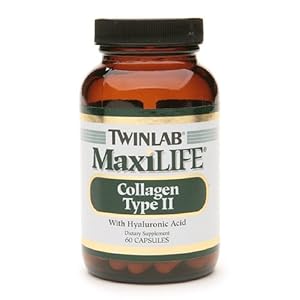
Hyaluronic Acid, which is naturally found in the body provides intense moisture to the skin and keeps you looking youthful. Hyaluronic acid is a natural glycosaminoglycan (polysaccharides that are an important component of connective tissue) and can be derived from multiple resources, foods, and supplements. Iv'e been taking a hyaluronic acid supplement for sometime after I read on a forum online that it made a womans lips look plumper. Yes, you heard me right! I have to admit that when I take my hyaluronic acid supplement that it does increase the size of my lips. In lip augmentation procedures the plastic surgeon actually uses a needle and puts hyaluronic acid injections into the lips! Hyaluornic acid has been a blessing for my skin! Iv'e always had super dry skin so when I used a hyaluronic acid serum externally and a supplement internally it was a skin quenching miracle! If you would like to learn more about how to acheive moisturized skin, plumper lips, and reducing joint pain please read on.
The average human has approximately 15 grams of hyaluronan (hyaluronic acid) in the body, one-third of which is "turned over" (degraded and synthesized) every day. HA provides supplies of synovial which is needed in healthy joint lubrication, and to keep you mobile. It also keeps cartilage extremely flexible and strong. In actual fact HA is present in each and every tissue of the body carrying out some vital functions. Large amounts of Hyaluronic acid can be found inside the eyeball? This is called the vitreous humor and is made up almost completely of hyaluronic acid. Restylane which is a HA injectable filler is used for sagging skin in the cosmetic industry.
This is the serum I use which is amazing:

Supplement I take:
No comments:
Post a Comment